
Water around a water heater is one of the most common calls we get, and the first question is always the same: where is it actually coming from? Water runs downhill and pools at the lowest point, so the puddle is often nowhere near the source. It might be the temperature and pressure relief valve or its discharge line, the drain valve near the bottom of the tank, the inlet and outlet fittings on top, condensation on a cold tank, or a nearby pipe that has nothing to do with the heater. It might also be the tank itself, and that answer changes everything. In Lakeville, MN, we start every leak call by finding the true source.
Our diagnosis is methodical. We dry the area, check the relief valve outlet and discharge pipe, inspect the drain valve, and follow the hot and cold lines up to the fittings on top of the tank. On gas units, we look under the burner access for water, which can point to condensation or, more seriously, a failing tank. If the relief valve has been discharging, we measure static water pressure and check for thermal expansion, since a closed plumbing system without an expansion tank can spike pressure every time the burner runs. Only then do we recommend a fix.
Once we know the source, the repair is usually straightforward. A new T&P valve, a brass drain valve in place of a weeping plastic one, fresh dielectric fittings or supply connectors, and an expansion tank or pressure-reducing valve when pressure is the cause can all be handled on the spot. A corroded tank is different. No sealant or patch will hold, so we explain replacement honestly and help you choose the right heater. Before we leave, we can add a drain pan with a drain line and a leak sensor, especially for heaters in attics, closets, or upstairs. Call (507) 301-0002 for leak repair in Lakeville.
What homeowners call us about most is Water Heater Repair in Lakeville and Water Heater Replacement in Lakeville. That's the place to start for most homes.
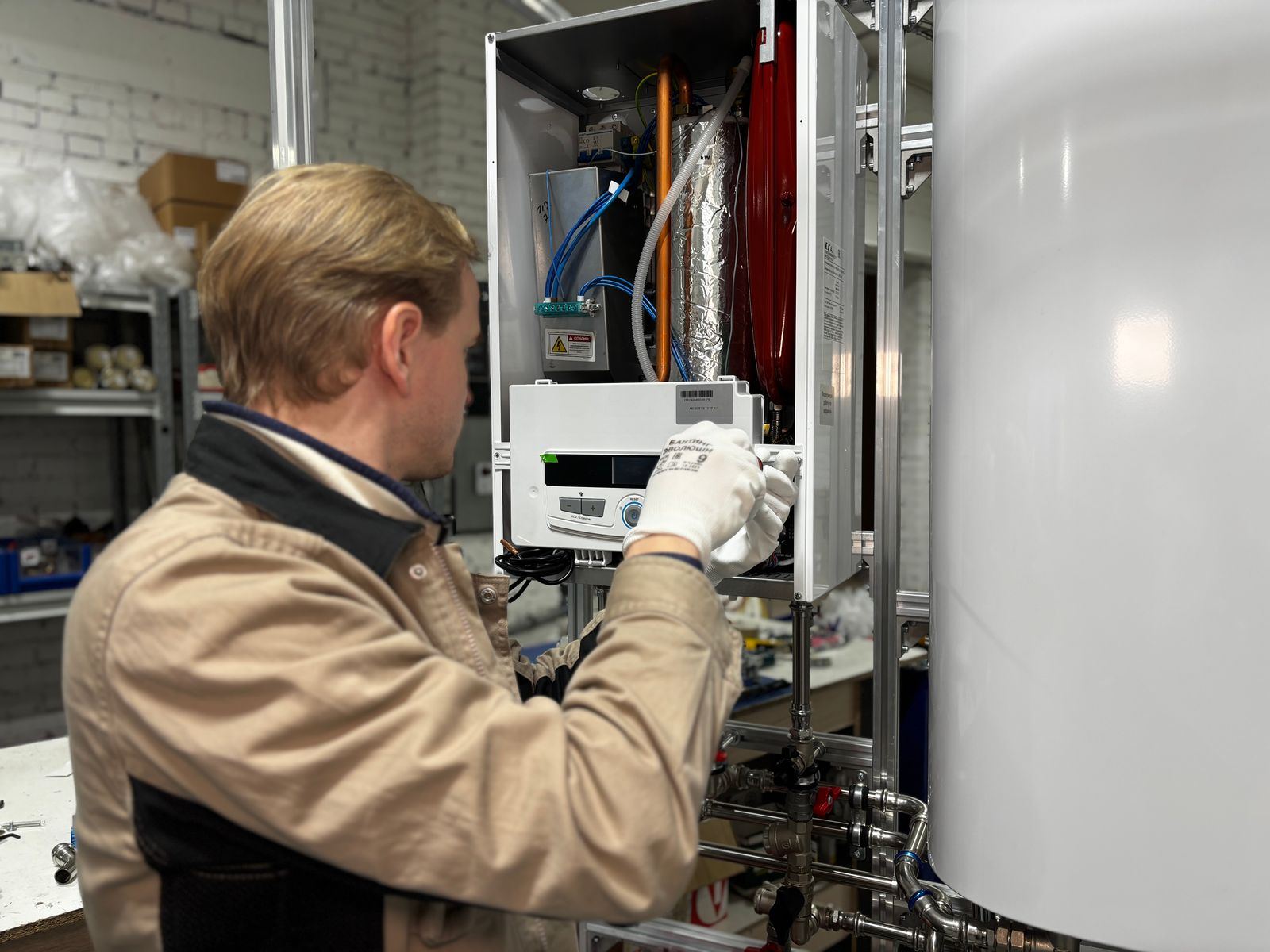
How to Tell Something Is Wrong
Water heaters usually give plenty of warning before they fail, as long as you know what to look and listen for. Watch for these telltale signs that professional help is needed:
- Brown hot water along with moisture around the tank bottom
- Moisture or mineral crust at the end of the relief valve pipe
- Steady drips from the drain valve near the base
- Moisture or rust flakes under the burner access cover
- Corroded pipe connections or damp flex lines above the heater
- Water collecting under or beside the heater
- Warped baseboards or stained drywall beside the water heater
- Higher water use with no obvious explanation
Don't Wait for a Total Failure
Tanks rarely fail all at once. They corrode from the inside for months, and the warning signs show up long before the floor gets wet. Call Lakeville Water Heater at (507) 301-0002 at the first sign of trouble.
Need Help With Water Heater Leak Repair?
We'll diagnose the problem and give you a straight answer on the fix.
Get Help: (507) 301-0002Water Heater Leak Repair FAQ
Why Professional Water Heater Leak Repair Matters
Reading a water heater leak correctly is harder than it looks. Water pooling at the base may start at a fitting on top and run down the jacket, and condensation on a cold tank can look exactly like a failure. Buying the wrong part is money down the drain, and missing a failing tank can lead to a much bigger flood later. Safety is part of the picture as well. The relief valve protects against dangerous temperature and pressure, and capping or plugging it to stop a drip can set up a violent failure. Tightening corroded fittings on an old tank can crack them, and electric models run on 240-volt power that do not mix well with wet floors.
We work through leaks step by step and fix the cause along with the drip. We dry the unit, let new water reveal the source, put a gauge on the system whenever the relief valve is involved, and check for expansion issues that cause weeping valves. We replace valves and fittings with durable replacements, swap plastic drain valves for brass, and add an expansion tank or pressure-reducing valve when pressure is the root problem. When the tank is the problem, we say so directly and explain replacement options, including the drain pan and leak protection that can keep the next failure from turning into water damage.
What to Expect From Our Team
We follow the same careful process on every water heater, whether it's a quick thermostat swap or a full tankless conversion. Here's a look at each step our team takes:
Isolate the Leak
We help you close the cold supply and shut off gas or power, then protect nearby flooring and belongings so the damage stops spreading.
Trace the Source
Every likely source gets checked: T&P valve, drain valve, inlet and outlet fittings, connectors, condensation, and the tank itself. No part is swapped until the source is confirmed.
Measure What Caused It
Leaks often have a cause behind the cause. Pressure above about 80 psi or a waterlogged expansion tank gets found and corrected.
Fix and Confirm Dry
Repairs are tested, not assumed. We restore water and heat, check each joint, and suggest a drain pan or leak sensor where it would help. If the tank has failed, we explain replacement plainly.
Simple Ways to Extend Your Water Heater's Life
A few preventive steps can help you avoid a cold shower or a wet floor down the road. Here's where to begin:
- Add a floor sensor or an automatic shutoff valve that closes the supply when it detects water
- Install a drain pan piped to a safe spot, which matters most for attic, closet, and upstairs heaters
- Glance at the heater monthly for damp spots, rust, or crust on the fittings
- Annual flushing removes sediment that traps heat against the tank floor
- Replace a depleted anode rod before the steel tank becomes the next target for corrosion
- Check your water pressure; if it runs above about 80 psi, a pressure-reducing valve protects the tank and valves
- Make sure a closed plumbing system has a working expansion tank to absorb heated water
Doing It Yourself vs. Hiring a Technician
Online videos may help in a pinch, yet lasting repairs and code-compliant installs depend on correct venting, proper relief valve discharge piping, and a trained technician. Here's how the two approaches stack up:
| Factor | DIY Attempt | Professional Service |
|---|---|---|
| Finding the Source | Fix the part nearest the puddle | Surfaces dried and each source confirmed |
| T&P Valve | Valve swapped without checking why | Pressure and expansion tested, valve replaced properly |
| Corroded Connections | Tightened until the fitting cracks | Proper fittings installed and tested |
| False Alarms | Normal sweating treated as a leak | False leaks ruled out with testing |
| Protecting the Home | Floors left exposed to the next leak | Shutoff labeled and leak alarms suggested |
| Outcome | Drip returns in weeks | Lasting fix, verified under pressure |
Let's Get Your Hot Water Back
Every day a leak or a failing part goes unchecked puts more stress on the tank. Get Lakeville Water Heater on the job today.
Call (507) 301-0002 NowWater Heater Leak Repair Across the Lakeville Area
Our service area reaches well past the city limits. Choose your community for local details.